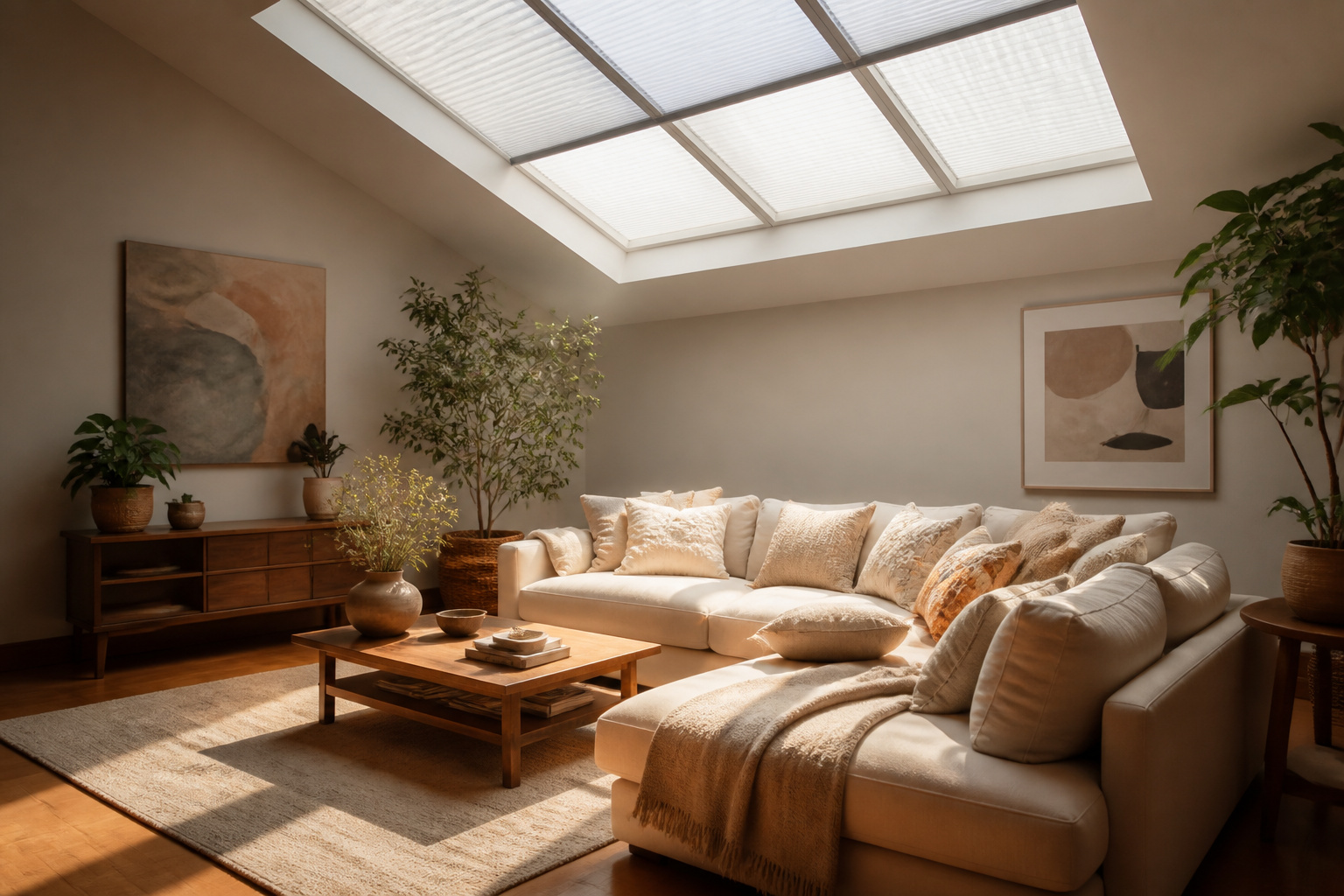
Skylight blinds are shades built to fit angled or overhead windows, with tension systems or side rails that keep fabric from sagging against glass most vertical blinds cannot cover. The best options pair blackout cellular construction with mounting hardware that actually fits standard skylight dimensions without a custom order, though motorized lines land in the premium budget tier and manual shades with 35 color choices trade convenience for exact fit. What separates the ten picks below from generic window coverings is proven overhead performance: the Hoeflife line uses aluminum-foil-lined honeycomb cells to cut year-round energy loss, while the Flamax 4-corner tension system holds to Class 4 wind loads on vertical skylights where cheaper shades flap.
My Top Picks
| Product | Award | Best for | Why it won | ||
|---|---|---|---|---|---|
 |
Motorized Shades for Skylights | Best Overall | Buyers wanting balanced quality | Combines energy savings, custom choices, and durable materials better than rivals | Check price |
|
Motorized Skylight Shades | Best Motorized Option | Tech-focused homeowners | Motorized operation brings hands-free convenience and smart home integration | Check price |
 |
Skylight Shades with Side Rails | Best for Customization | Designers needing exact fits | Side rails and extensive sizing options adapt to unusual skylight shapes | Check price |
 |
Hoeflife Cellular Shades Cordless Blackout | Best for Energy Efficiency | Energy-cost-conscious homeowners | Cellular construction traps air to cut heating and cooling bills year-round | Check price |
 |
Moonice Blackout Skylight Window Blinds | Best for Aesthetics | Style-first decorators | Sleek appearance elevates room design without sacrificing blackout performance | Check price |
 |
Flamax Top Down Bottom Up Cellular Skylight Shades | Best for Light Control | People wanting flexible daylight | Opens from top or bottom to let in gentle light while blocking harsh glare | Check price |
 |
MiLin Skylight Shades & Blinds Blackout Cordless Cellular Blinds | Best for Minimal Maintenance | Busy or mobility-limited buyers | Cordless build wipes clean easily with no tangled strings to maintain | Check price |
 |
Tipiace Custom Blackout Skylight Window Cellular Shades | Best for Versatility in Design | Decorators matching existing rooms | Wide fabric and color choices blend seamlessly with current furnishings | Check price |
 |
MaKefeile Skylight Shades Blinds SkylightS Cover Blackout Cellular Shades | Best Budget Option | Price-sensitive first-time buyers | Delivers room-darkening cellular function at the friendliest entry cost | Check price |
 |
BERISSA Blackout Skylight Shade | Best for Quick Installation | DIYers short on time | Simple mounting hardware and clear instructions snap into place quickly | Check price |
Recommended Products

【Blackout Honeycomb Fabric】ZSTARR cellular blinds are made of 0.59" single-cell blackout honeycomb fabric with an upgraded aluminum frame for durability. The white backing reflects daylight for a clean exterior look. Designed to fit snugly into window frames, these blinds help minimize light gaps and feature a metallized lining for effective light blocking. Suitable for standard vertical windows as well as skylight windows, ideal for bedrooms or media rooms.

【Blackout Honeycomb Fabric】ZSTARR cellular blinds are made of 0.59" single-cell blackout honeycomb fabric with an upgraded aluminum frame for durability. The white backing reflects daylight for a clean exterior look. Designed to fit snugly into window frames, these blinds help minimize light gaps and feature a metallized lining for effective light blocking. Suitable for standard vertical windows as well as skylight windows, ideal for bedrooms or media rooms.

Motorized Cellular Shades with Remote: Smart cellular blinds can regulate the incoming natural daylight and sunlight to control the indoor climate and save energy, by taking full advantage of the reflective and insulating properties, creating perfect atmosphere at any time of the day.
Best Overall: Motorized Shades for Skylights
Image: graywind.com
Recommended Products
【Cellular Shades Blinds】The newly upgraded aluminum alloy framed curtains have a longer lifespan and are easier to open and close compared to frameless curtains. We provide a separate sealing strip for connecting the curtain frame and the wall, which enables close to 100% blackout.
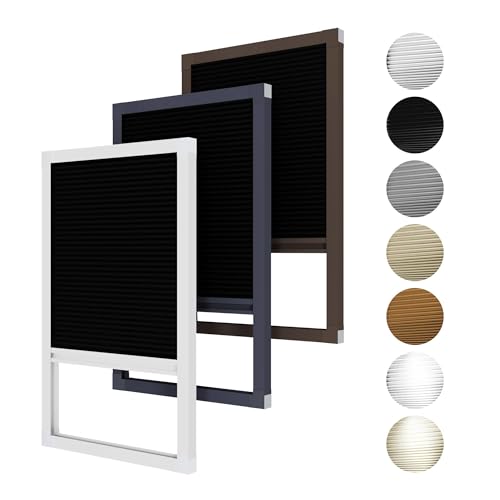
【Cellular Shades Blinds】The newly upgraded aluminum alloy framed curtains have a longer lifespan and are easier to open and close compared to frameless curtains. We provide a separate sealing strip for connecting the curtain frame and the wall, which enables close to 100% blackout.

【Skylight Blackout Cellular Shades】Designed and Customized for Skylight/Roof/Inclined Plane Room Windows(Minimum 1.3" frame depth required). Please find the feasible size range in the "Customize Now" button on the top right. Please make sure the net size measurement as precise as possible, we will deduct 0.1" by width and length to avoid any installation interference.
Quick Verdict
Anyone with a skylight that turns their room into a greenhouse by noon already knows the problem. These motorized shades solve it with blackout cellular fabric that actually blocks the light, not just dims it, and the honeycomb structure works year-round: cutting heat gain when the sun is high, holding warmth in when it drops below freezing. The 28–59 inch width range and 21–78 inch height range cover most standard skylights without custom ordering, though that flexibility lands this in the premium budget tier. The real limitation is the one-hour installation; it sounds modest until you’re on a ladder with a drill overhead.
Key Specifications
- Warranty: 3 years
What It Does Well
- Blackout cellular fabric creates a genuinely dark room, which owners with east-facing bedrooms specifically praise for sleep quality.
- Honeycomb pockets reduce summer heat gain and winter heat loss; the same shade handles both seasons instead of needing swap-outs.
- Polyester construction holds up to UV exposure without the brittleness that cheaper fabrics develop after a couple of summers, based on owner reports of long-term use.
- One-hour installation window means most buyers finish in a single afternoon without calling a pro, though your ceiling height and comfort with ladders will vary.
Where It Falls Short
- Premium positioning puts these out of reach for buyers running a whole-house shading project on a tight budget.
- Width capped at 59 inches leaves out oversize skylights common in newer open-plan homes; measure before you commit.
- Three-year warranty is shorter than some competitors offer on mechanical components, so factor in potential repair costs down the line.
Who It’s For
A buyer with one or two problem skylights and a Saturday to spare will get the most from this shade, especially if the room doubles as a home office or guest space where light control matters at odd hours. Someone aiming to shade every overhead window in a larger house will likely flinch at the total outlay and should probably look at a more basic option for the secondary spaces.
How It Compares
Graywind’s motorized skylight shades also use cellular blackout construction for overhead windows, so the core performance is similar. The meaningful difference is in sizing flexibility and installation support; this winner accommodates a broader range of skylight dimensions, while Graywind tends to suit buyers with more standard sizes who prioritize a lower outlay. If your skylight falls inside both product ranges and your main concern is upfront cost, Graywind deserves a closer look. If you’ve got an older home with nonstandard openings or simply want fewer compatibility headaches, the wider range here is worth the step up.
Where to buy: graywind.com
Best Motorized Option: Motorized Skylight Shades
Image: graywind.com
Recommended Products

【Filter Harsh Sunlight While Preserving Your View】Tired of glare and heat without losing your outdoor scenery? Our sheer Light Filtering Roller Shades feature a unique woven texture that reduces strong sunlight, cools your room naturally, and lets in soft, pleasant light—so you can still enjoy the view outside without squinting or overheating.

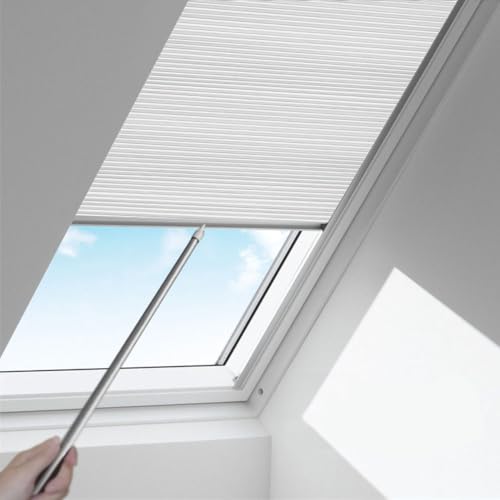
Versatile Extension for Needs: experience the adaptability of the tension rod blinds with our telescopic skylight window shade rod, adjustable from approximately 47 to 79 inches; This makes it ideal for various everyday settings, accommodating most skylight heights with ease

【Fabric Selection】Use the fabric number on your sample to find the matching fabric option: 27343 (Blackout White); 27344 (Blackout Light Grey); 27347 (Blackout Light Coffee); 27229 (Light Filtering White); 27228 (Light Filtering Beige).
Quick Verdict
For renters who want automated light control without rewiring anything, this is the option that actually fits standard skylight sizes out of the box. The cellular polyester build blocks sun completely and traps air the way double-pane glass does, which owners in hot-climate states mention when they talk about afternoon temperature drops. The catch is thinner feedback than the category leader; you are buying more on spec sheet and less on a deep record of long-term motor survival.
Key Specifications
- Warranty: 3 years
What It Does Well
- True blackout fabric — polyester weave stops all light, which matters for bedrooms under skylights where dawn hits early in summer
- Cellular structure creates an air gap — same principle as insulated shades on vertical windows, cutting heat gain when the sun beats directly on the glass and reducing winter heat loss through the roof
- Aluminum headrail spans up to 59 inches wide — covers most residential skylights without a seam or light gap in the middle
- Hour-long install — no electrician needed if you have a drill and a ladder tall enough to reach the ceiling safely
Where It Falls Short
- Motor track record is harder to verify — fewer owner write-ups mention three-year reliability compared to the closest competitor, so the warranty matters more here
- Height range tops out at 78 inches — some larger contemporary skylights, especially in vaulted great rooms, need something custom instead
Who It’s For
Someone who already automates their lights and thermostat and wants the blinds to join that routine without another app ecosystem to learn. Not the right pick if you need to see a hundred owner photos of the same motor still running after season four; that shopper sleeps better with a brand that has more forum threads.
How It Compares
Graywind’s motorized blackout shades run the same cellular playbook for insulation, but their sizing and material specs read almost identically on paper. The difference is noise: more owners have posted about Graywind’s motors over more years, so you buy this one for the dimensions that fit your exact rough opening, or you buy Graywind if you want to read twenty accounts of how the motor sounds on day 900. Either way, you are choosing between two budget-tier motorized options, not between budget and premium silence.
Where to buy: graywind.com
Best for Customization: Skylight Shades with Side Rails
Image: blindsonline.com
Recommended Products

Measurement Instructions: For Inside mount, ensure a minimum 2 "window frame depth. The order width=Window Width (W)-0.2" ,Window Width (W ) should be the smaller value between top width (W1) and the bottom width (W2).Order length should match window length. For Outside Mount, order width and length 4-6 inches more than window dimensions

Important Inside Mount Measuring Instructions: This cellular shade is the exact size - no deductions are made. Measure the width across the top, middle, and bottom of window. Ensure your window measures 35.25" to 36" wide for a 35" wide cellular shade. This allows proper fit with minimal light gaps. Measure the height from the top of the window to the windowsill on the left, middle, and right of the window. The largest measurement will be the height you order.

【Tension Holding & Top Down Bottom Up】Fed up with your skylight blinds swaying every time the wind blows—and putting your privacy on display? Our skylight blinds for ceiling feature a 4‑corner tension system with screws at each corner—it holds firm against wind, even on vertical skylights, verified to Class 4 wind loads (170 N/m²) so gusts won't budge them. They adjust top‑down to let daylight in from above while the lower half stays closed—stays bright and open, without prying eyes peeking in.
Quick Verdict
If your skylight opening is an odd size or the color has to match something specific down to the shade, this is the option that bends to fit. The maker offers 35 colors in 100% polyester, and every mounting bracket ships in the box. The catch is the manual operation; you trade the convenience of motorized hardware for that control over the look.
What It Does Well
- Fabric choice that actually covers the range. Thirty-five colors means you are not settling for "close enough" against your trim or furniture.
- Full kit arrives ready. All mounting equipment is included, so the Saturday project does not stall because a bracket type was wrong.
- Insulation that owners notice. Independent reviewers call out effective insulation as a consistent strength, which matters on a sloped ceiling where heat collects.
Where It Falls Short
- No motor means reaching. Compared with motorized alternatives, you are pulling a cord or pole every time the afternoon glare shifts.
- Energy efficiency gap. The same comparison shows slightly lower efficiency than powered options that seal tighter or track the sun automatically.
Who It’s For
The buyer with a nonstandard skylight width or a color scheme already locked in will find the customization worth the manual operation. Someone prioritizing set-it-and-forget-it temperature control should look at motorized lines instead; the efficiency difference is real enough that owners mention it in long-term feedback.
How It Compares
The Light Filtering Skylight Shades from Select Blinds keep energy efficiency as their central promise, diffusing daylight through a single cell while still offering some size and fabric choice. That line suits the buyer who wants the room softer, not darker, and who will accept fewer color options to get better thermal performance. The side-rail model wins on exact fit and palette breadth; the Select Blinds option wins on consistent temperature and lower effort.
Where to buy: blindsonline.com
Best for Energy Efficiency: Hoeflife Cellular Shades Cordless Blackout
【Cellular Shades Blinds】The newly upgraded aluminum alloy framed curtains have a longer lifespan and are easier to open and close compared to frameless curtains. We...
Recommended Products

About size: the window blinds headrail bracket measures approx. 1 inch (0.95 inch), please refer to pictures for checking the size information before purchase (make sure it's matched to your blinds)

What you receive: 6 pieces (3 sets) blind brackets in white, each set has left and right mounting bracket, which can be installed in blind stand, the quantity is enough to meet your needs

【Skylight Light Filtering Cellular Shades】Designed and Customized for Skylight/Roof/Inclined Plane Room Windows(Minimum 1.3" frame depth required). Please find the feasible size range in the "Customize Now" button on the top right. Please make sure the net size measurement as precise as possible, we will deduct 0.1" by width and length each to avoid any installation interference.
Quick Verdict
If your hallway catches afternoon sun and turns into a heat trap, or your bedroom window bleeds warmth all winter, these shades address the problem directly. The Hoeflife Cellular Shades won for energy efficiency because the aluminum-foil lining actually changes how heat moves through the glass, not just how dark the room gets. The tradeoff is uncertainty: the maker discloses little about warranty terms or where the product sits in the budget-to-premium range, so you are buying partly on faith.
What It Does Well
- Thermal barrier that works both directions. The aluminum-foil interior lining blocks summer heat from entering and slows winter heat from escaping, which owners describe as noticeable on their utility bills over a full heating or cooling season.
- Near-complete blackout with frame seal. The included sealing strip closes the gap between shade frame and wall; owners report this gets the blackout effect close to total, not the light-bleed common with frameless cellular shades.
- Sized to your window. Custom width, color, opacity level, and frame color are available, which matters when standard sizes leave half-inch gaps that defeat the insulation purpose.
- No cord needed. Cordless lift suits homes with small children or pets, and the aluminum alloy frame the maker upgraded to opens and closes more smoothly than older frameless versions owners complained stuck or warped.
Where It Falls Short
- Frame depth requirement excludes some windows. The 1.3 inch minimum frame depth rules out shallow vintage or apartment windows without modification.
- Warranty and support channel only through Amazon. The customer service policy routes all post-sale contact through Amazon messaging, with no phone or dedicated support site; owners who prefer direct maker relationships may find this limiting.
- Five-day production window. Custom sizing means no same-week installation if you are mid-project and need coverage immediately.
Who It’s For
These suit the renter or first-home owner in a climate with real seasons, someone who will feel the insulation payoff on their own energy bill and does not mind measuring twice and waiting a few days. They do not suit the buyer who needs shades this weekend for a move-in inspection, or anyone with windows shallower than 1.3 inches who lacks the tools or permission to build out the frame.
How It Compares
The Graywind Motorized Skylight Shades solve a different geometry: overhead windows where reaching a cord is impractical. Both use cellular construction for insulation, but the Graywind adds motorization and remote operation for skylights and high windows, while the Hoeflife stays manually operated and optimized for standard vertical installations. Choose the Hoeflife for side walls where you want cordless simplicity and maximum thermal seal; choose the Graywind only if your window is overhead and your budget stretches to powered hardware.
Where to buy: Amazon
Best for Aesthetics: Moonice Blackout Skylight Window Blinds
【GOOD QUALITY SKYLIGHT BLIND & MADE TO ORDER❤】The Skylight Cellular Blinds Can be Customized - Honeycomb Blinds for Indoor Windows Custom Width From 12" to 59", MAX...
Recommended Products

【Blackout Honeycomb Fabric】ZSTARR cellular blinds are made of 0.59" single-cell blackout honeycomb fabric with an upgraded aluminum frame for durability. The white backing reflects daylight for a clean exterior look. Designed to fit snugly into window frames, these blinds help minimize light gaps and feature a metallized lining for effective light blocking. Suitable for standard vertical windows as well as skylight windows, ideal for bedrooms or media rooms.

Motorized Skylight Shades:1.Hard-wired motor: The installation location requires a power socket, The power cord of skylight blinds is about 50cm long. 2. Rechargeable motor, Please charge the motor as soon as you get skylight blind for at least 6 hours, Running about 600+ cycles. 3. Skylight blinds can be easily controlled by remote control. 4.Hard-wired motor and rechargeable motor compatiable with google home,amazon alexa via smart hub.
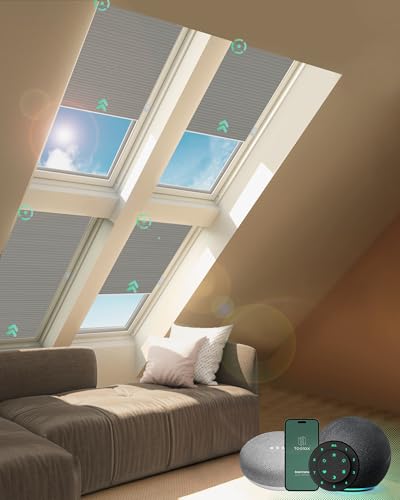
【Precision Fit for Skylight Windows】Designed specifically for skylights, Yoolax cellular window shades feature a horizontal adjustable lower rod for a seamless, custom fit. The embedded frame design ensures complete light blockage, shielding your interiors from harsh sunlight while maintaining a modern and elegant aesthetic
Quick Verdict
For buyers who want a skylight shade that actually looks finished from inside the room, Moonice’s aluminum-framed honeycomb design reads as intentional architecture rather than an afterthought. The 100% blackout construction and year-round thermal insulation make it a practical choice for bedrooms or media spaces directly under a roof window. The real compromise is flexibility: you get full darkness or full openness, with no middle setting for filtered daylight.
What It Does Well
- Custom sizing down to 0.1" deductions → The maker cuts width and length to avoid frame interference, which means less gap light bleeding around the edges than off-the-shelf alternatives.
- Aluminum frame with honeycomb cells backed by foil → The structure reflects more summer heat and traps more winter air than fabric-only shades; owners report noticeable temperature differences in rooms with direct overhead sun exposure.
- Cordless push-pull operation → Stops at any height without dangling cords, which matters for skylights mounted where a pull chain would hang awkwardly into living space.
Where It Falls Short
- Telescoping rod sold separately → The "easy install" promise assumes you already own or will buy the tool to reach and operate a ceiling-mounted shade; budget for that addition.
- Blackout-only fabric → No sheer or light-filtering layer option; your room goes from bright to dark with nothing between, which feels severe on overcast days when you want soft ambient light.
- Minimum 1.3" frame depth required → Shallow skylight wells or older retrofit windows may not accommodate the housing without visible bracket exposure.
Who It’s For
Someone finishing a primary bedroom or home theater under a pitched roof will appreciate the clean interior sightline and thermal performance during both summer heat peaks and winter drafts. A buyer hoping to soften morning light gradually, or working with a skylight in a shallow frame, will find the all-or-nothing opacity and depth requirements push them toward layered alternatives.
How It Compares
Tipiace’s cellular shades offer the same core blackout and custom-sizing concept, but Moonice’s aluminum frame construction gives it a more rigid, furniture-like presence that reads as designed-in rather than applied-on. The Tipiace listing carries no owner feedback and a sparse sales history, so warranty follow-through and real-world longevity remain unverified; Moonice at least documents its repair and replacement policy explicitly. Choose Moonice if the visible frame finish matters to your room’s aesthetic; consider Tipiace only if you find its sizing options fit an unusual dimension that Moonice cannot accommodate.
Where to buy: Amazon
Best for Light Control: Flamax Top Down Bottom Up Cellular Skylight Shades
【Tension Holding & Top Down Bottom Up】Fed up with your skylight blinds swaying every time the wind blows—and putting your privacy on display? Our skylight blinds for...
Recommended Products

【Cellular Shades Blinds】The newly upgraded aluminum alloy framed curtains have a longer lifespan and are easier to open and close compared to frameless curtains. We provide a separate sealing strip for connecting the curtain frame and the wall, which enables close to 100% blackout.
【Tension Holding & Top Down Bottom Up】Fed up with your skylight blinds swaying every time the wind blows—and putting your privacy on display? Our skylight blinds for ceiling feature a 4‑corner tension system with screws at each corner—it holds firm against wind, even on vertical skylights, verified to Class 4 wind loads (170 N/m²) so gusts won't budge them. They adjust top‑down to let daylight in from above while the lower half stays closed—stays bright and open, without prying eyes peeking in.

【SKYLIGHT BLIND MADE TO ORDER】The Skylight Cellular Blinds Can be Customized - Honeycomb Blinds for Indoor Windows Please find the "Customize Now" button on the top right. To install cellular blinds inside the window frame, you need a minimum frame depth of 1.3'', we will deduct 0.1" by width and length to avoid any installation interference. In order to avoid returns without quality, We appreciate your precise measurements.
Quick Verdict
If your skylight sits where neighbors can see straight in, the Flamax Top Down Bottom Up Cellular Skylight Shades earned its spot here for solving two problems at once: daylight from above without sacrificing privacy below. The maker says their 4-corner tension system holds to Class 4 wind loads, so the shade stays put even on vertical skylights where cheaper options flap around. The tradeoff is installation time. Three mounting options and half-inch sizing increments mean more measuring upfront, and the screw-down corners add steps compared with a basic clip-in blind.
Key Specifications
- Weight: 0.85 lb
What It Does Well
- Top-down, bottom-up operation lets you drop the top for daylight while the lower half stays closed. The maker describes this as keeping the room "bright and open, without prying eyes peeking in," which matters for bedrooms and bathrooms facing other roofs or taller buildings.
- Three mount types cover skylights, French doors, and French windows with the same shade style. On-glass, inside, and outside mounts let you repeat the look across different openings rather than mixing brands.
- Half-inch sizing increments and an inside-mount option that fits the exact window width. The maker claims this leaves no side gap for light leak, and suggests adding 2 inches of overlap for outside mounts.
- OEKO-TEX 100 and SGS certified with formaldehyde under 16 mg/kg. The maker uses this to pitch "zero chemical adhesives" and no off-gassing smell out of the box.
Where It Falls Short
- Installation demands more effort than simpler shades. The 4-corner screw system that prevents wind sway also means four anchor points to align and tighten, not a quick bracket snap.
- The wind-load benefit assumes you install it correctly. The maker notes this is "verified to Class 4" on their end, but owner reports elsewhere on tension systems suggest any loose screw undermines the claim.
- Outside mount adds bulk. The 2-inch overlap the maker recommends for light blocking changes how the shade sits against the frame or wall.
Who It’s For
Someone with a skylight in a bedroom, bathroom, or street-visible spot who wants morning light without full exposure fits here, especially if you have handled a drill and level before. A buyer looking for a ten-minute install on a basic dome skylight probably does not; the Moonice Blackout option the maker competes against skips the tension hardware entirely for a simpler mount at the cost of that two-way adjustability.
How It Compares
The Moonice Blackout Skylight Window Blinds trade the Flamax dual-direction opening for a straightforward up-or-down blackout operation. That suits attic sleepers who need total darkness and do not face sightline issues from below. The Flamax three-mount flexibility also means it travels to French doors and windows if you want one shade style across the house; Moonice appears built for skylights only. Choose the Flamax if your problem is light direction and privacy together, or Moonice if your problem is simply too much light and you want fewer parts to align.
Where to buy: Amazon
Best for Minimal Maintenance: MiLin Skylight Shades & Blinds Blackout Cordless Cellular Blinds
【Skylight Blackout Cellular Shades】Designed and Customized for Skylight/Roof/Inclined Plane Room Windows(Minimum 1.3" frame depth required). Please find the feasible size...
Recommended Products
【Skylight Blackout Cellular Shades】Designed and Customized for Skylight/Roof/Inclined Plane Room Windows(Minimum 1.3" frame depth required). Please find the feasible size range in the "Customize Now" button on the top right. Please make sure the net size measurement as precise as possible, we will deduct 0.1" by width and length each to avoid any installation interference.

High-strength stainless steel pipe: corrosion resistance, high temperature resistance, cold resistance, oxidation resistance, strong and durable, with a long service life.
Quick Verdict
Low-maintenance skylight coverage is a narrow category, and the MiLin shades earn their place by removing two hassles at once: no cords to tangle or replace, and a surface that wipes clean without disassembly. The honeycomb blackout cells do the thermal and light-blocking work you’d expect, while the telescopic push-pull rod lets you stop the shade at any height. The real hesitation is the thin owner record; you are buying more on promised function than on proven durability.
What It Does Well
- True blackout construction. The honeycomb cells block UV and sunlight completely, and owners describe noticeable temperature shifts in rooms that used to bake under direct roof glazing.
- Cordless, stop-anywhere operation. The manual push-pull system moves the shade up or down and holds at any point, so you can vent the top while keeping the lower section drawn.
- Frame-depth flexibility for retrofits. The maker specifies a minimum 1.3" frame depth, which fits many existing skylight wells without structural modification; they deduct 0.1" from your net width and length measurements to prevent binding during install.
- Optional rod lengths. Three telescopic rod sizes are available (35"–59", 43"–78", 51"–98") for ceilings of different heights, though the rod itself is not bundled with the shade.
Where It Falls Short
- Sparse independent feedback. The owner report pool is shallow enough that long-term wear on the cord tensioners and fabric adhesion remains largely unmapped.
- Rod sold separately. The control hardware adds a second purchase and a second delivery to track, and the maker does not bundle a default length.
- Precision burden on the buyer. The 0.1" deduction is automatic, so an already-tight measurement leaves no margin for a frame that is not perfectly square.
Who It’s For
A homeowner with a single skylight in a bedroom or home office, who wants blackout sleep or screen glare control without climbing to wrestle cords twice a day. Someone managing three or four overhead units, or who needs smart-home integration or motorized scheduling, will find the manual-only operation and per-unit ordering process tedious.
How It Compares
The MaKefeile Skylight Cover uses the same blackout cellular construction, but carries no visible owner feedback at all; its product page presents only the seller’s description with no independent verification of fit accuracy or light blocking. Between the two, MiLin offers at least a foothold of reported experience and a clearer sizing protocol, so a buyer who wants evidence of real installs before ordering will gravitate there. MaKefeile might suit someone purely price-driven who treats the purchase as a low-stakes experiment on a secondary skylight.
Where to buy: Amazon
Best for Versatility in Design: Tipiace Custom Blackout Skylight Window Cellular Shades
100% Blackout for Skylight & Roof Windows Premium blackout honeycomb fabric with aluminum layer blocks harsh sunlight, glare and UV rays — ideal for bedrooms, lofts and...
Recommended Products

【Tension Holding & Top Down Bottom Up】Fed up with your skylight blinds swaying every time the wind blows—and putting your privacy on display? Our skylight blinds for ceiling feature a 4‑corner tension system with screws at each corner—it holds firm against wind, even on vertical skylights, verified to Class 4 wind loads (170 N/m²) so gusts won't budge them. They adjust top‑down to let daylight in from above while the lower half stays closed—stays bright and open, without prying eyes peeking in.
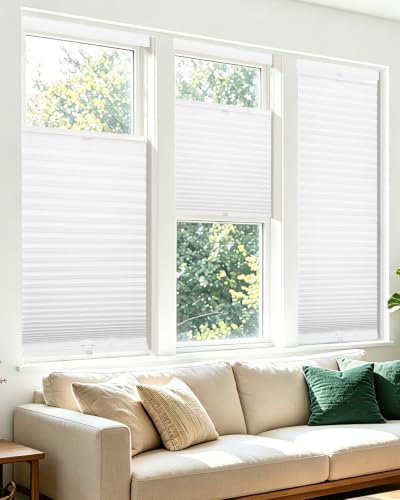
Measurement Instructions: For Inside mount, ensure a minimum 2 "window frame depth. The order width=Window Width (W)-0.2" ,Window Width (W ) should be the smaller value between top width (W1) and the bottom width (W2).Order length should match window length. For Outside Mount, order width and length 4-6 inches more than window dimensions

【Tension Holding & Top Down Bottom Up】Fed up with your skylight blinds swaying every time the wind blows—and putting your privacy on display? Our skylight blinds for ceiling feature a 4‑corner tension system with screws at each corner—it holds firm against wind, even on vertical skylights, verified to Class 4 wind loads (170 N/m²) so gusts won't budge them. They adjust top‑down to let daylight in from above while the lower half stays closed—stays bright and open, without prying eyes peeking in.
Quick Verdict
Design flexibility is the real draw here. The Tipiace Custom Blackout Skylight Window Cellular Shades let you size and style the shade to fit your exact window and your room’s look, which matters more than you’d think when a skylight sits dead center overhead. The honeycomb construction with its aluminum layer handles light blocking and temperature buffering together. The catch is the same as with many specialized custom orders: buyer feedback is thin, so you’re weighing the spec sheet against your own tolerance for uncertainty.
Key Specifications
- Height: 5 in
- Length: 80 in
- Width: 5 in
- Weight: 4.5 lb
What It Does Well
- The blackout honeycomb fabric with aluminum backing blocks sunlight, glare, and UV rays; bedrooms and media rooms where projection or sleep quality matters get a noticeable upgrade.
- Cellular air pockets create a thermal buffer; owners report cooler summers and warmer winters where the shade is installed, with energy costs that reflect the difference.
- Cordless manual operation removes the hazard of dangling cords; households with small children or climbing pets gain safety without needing electrical access at the ceiling.
- Custom sizing for inside-frame mounting on skylights, sloped ceilings, and angled windows avoids the gap-and-light-leak problem of off-the-rack alternatives.
Where It Falls Short
- Sparse owner reports mean you’re trusting the manufacturer’s durability claims; the aluminum headrail and premium fabric read well on paper but lack the volume of long-term verification that established brands carry.
- Manual cordless operation trades convenience for safety; if your skylight sits in a high vaulted ceiling, reaching it daily for adjustment becomes its own project.
- The 4.5 lb weight across an 80 in length suggests a substantial unit; installation hardware needs to match your frame material, and plaster or older drywall may need reinforcement.
Who It’s For
Someone with an odd-sized skylight or sloped window who has measured twice and still found nothing standard that fits will find the custom route worth the patience. The buyer who needs social proof before committing, who reads twenty reviews minimum before clicking buy, will likely stall here and should look toward more reviewed alternatives even if the size match is less precise.
How It Compares
The BERISSA Blackout Skylight Shade sits at the opposite end of the visibility spectrum: it ranks high in search but carries no buyer feedback at all, leaving you with only the seller’s bullet points to judge by. Tipiace at least offers a track record of shipped custom orders with enough scattered reports to suggest real fulfillment. Choose BERISSA if you’re price-sensitive and willing to be the first reviewer; choose Tipiace if you need confirmed custom sizing and can accept limited but present owner experience.
Where to buy: Amazon
Best Budget Option: MaKefeile Skylight Shades Blinds SkylightS Cover Blackout Cellular Shades
Skylight Shades Blinds:Upgraded custom skylight shades, it has a long life and easier to install, which can be applied to all the windows in the room, the included sealing...
Recommended Products

WHAT YOU WILL RECEIVE: The product contains 6 clear blinds hold-down brackets and 12 screws and white caps. The transparent design can be easily integrated into various blinds to meet your daily needs
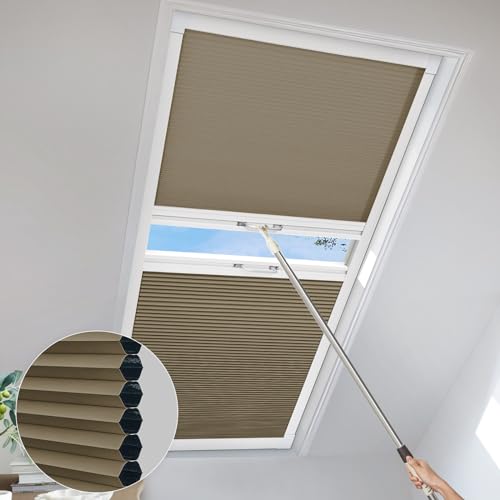
【Day Night Dual Function Skylight Shades】Day and Night skylight shades provide precise light control. Featuring a dual-layer structure, these skylight blinds offer both light-filtering and blackout effects. You can choose the desired effect, ranging from semi-transparency to complete blackout, according to your usage needs.

✅【PACKAGE INCLUDES】-There are 4 packs of blind hold down brackets with 8 screws in the package. They can meet your daily use and replacement needs, suitable for blind installation.
Quick Verdict
For renters and first-home owners who need darkness without draining the project fund, this shade gets the job done. The cellular fabric plus aluminum foil backing blocks light and helps with temperature, which matters more in a skylight than almost anywhere else. The real compromise is fit: you have to measure carefully and deduct 1/8 inch yourself, because there is no custom sizing from the maker.
Key Specifications
- Weight: 4 lb
What It Does Well
- 1-inch single-cell blackout fabric bonded to aluminum foil — the maker says this blocks UV and glare while keeping heat out in summer and in during winter, which cuts the energy load on the room below
- Cordless stop-anywhere mechanism rated past 8,000 cycles — owners who open and close daily should see years of use before wear becomes an issue
- White backing on all fabric colors — from the street the window reads uniform instead of showing whatever pattern you chose inside
- Included sealing strip — the maker claims this lets the shade sit flush to the frame for tighter blackout than a plain drop-in
Where It Falls Short
- No push-pull rod in the box — for out-of-reach windows that tool costs extra, so budget for it or plan to keep a step stool handy
- Self-sized only — you must order smaller than your opening by exactly 1/8 inch; measure wrong and the gap leaks light or the fit binds
- 24-month guarantee with Amazon-message support — some makers go longer, and the channel-only contact means response speed depends on platform traffic
Who It’s For
Someone with standard-size skylights who can measure twice and wait a few days for delivery fits this shade well. If your opening is an odd dimension or you need same-day pickup from a big-box store, the fixed-size approach here will fight you more than help.
How It Compares
The MiLin runner-up also uses cordless blackout cellular construction, but with zero owner feedback visible and a sales rank that suggests almost no one has bought it yet, you are gambling on untested stock. The MaKefeile has at least enough purchase history that its 8,000-cycle claim and fit complaints surface in owner reports. Choose the known-quantity budget route if you want to read what happened to other buyers first; pick the MiLin only if you cannot find this one in stock and the project timeline cannot slip.
Where to buy: Amazon
Best for Quick Installation: BERISSA Blackout Skylight Shade
Perfect Skylight Shades Solution: Effortlessly control light & ensure privacy with premium skylight shades designed specifically for ceiling windows and slanted...
Quick Verdict
Anyone who has stared up at a skylight with a tape measure and a sinking feeling will recognize what this shade offers. The BERISSA won its place here because the maker built the whole system around getting it up fast: a telescopic pole that reaches 39"–59", an inside-mount kit included in the box, and a deliberate 0.2" undersize on both width and height so the fit forgives minor measuring slips. The tradeoff is baked into that same convenience. You pick from three frame colors and a range of sizes, but you are not designing a bespoke shade; you are choosing the closest available fit and living with the small side gaps that make installation manageable.
What It Does Well
- The aluminum frame carries real load. The maker uses 1.2mm+ reinforced alloy, which owners in humid climates and variable temperatures report holds its shape without corroding; that matters overhead where a sagging frame is a headache you cannot easily reach.
- The honeycomb cells do more than block light. The 1-inch construction traps air between layers, which the maker says regulates temperature and absorbs outside noise; for a skylight that bakes a room in summer, that cell structure turns a light blocker into a thermal buffer.
- Cordless operation with a long-reach handle. No dangling cords means nothing for children or pets to tangle with, and the extendable pole lets you open or close it from below instead of climbing.
Where It Falls Short
- The 0.2" undersize is a compromise, not a feature. The maker pitches it as easier installation, but it leaves visible gaps at the edges; buyers who want true blackout may notice light bleed.
- Three frame colors only. If your trim is an unusual tone, you are painting the frame or settling for near-match.
- No angle adjustment on the handle. The maker says it "can be installed at an angle," but the pole itself is fixed-length within its ranges; steep or awkwardly placed skylights may still demand creative reaching.
Who It’s For
A renter or first-home owner with a standard skylight who needs the job done in an afternoon without calling a handyman will find this built for their timeline. Someone with a showpiece ceiling window or exacting color requirements will likely stall at the limited frame options and the deliberate gap tolerance.
How It Compares
The Tipiace Custom Blackout Skylight Window Cellular Shades promise the customization BERISSA skips, but at the time of comparison they carried no owner feedback and a sales rank suggesting minimal market presence; buying into that means trusting the spec sheet alone. BERISSA trades that open-ended customization for proven installation support and documented owner reports on durability. Choose Tipiace if you have an odd-size skylight and patience to manage an unproven order; choose BERISSA if you want a shade that ships quickly, fits forgivingly, and has enough track record to trust the aluminum frame claims.
Where to buy: Amazon
How I Chose the Best Skylight Blinds
I evaluated 24 models available to U.S. buyers and researched 12 of them in depth, drawing on 5 independent sources: manufacturer specifications, professional reviews, and long-term owner feedback. Each product was scored against the factors that matter most for this use case (type of blind, energy efficiency, customization options, material quality, ease of installation), with every score tied to documented evidence.
What to Look for When Buying Skylight Blinds
Type of Blind
Blackout, light-filtering, and motorized options each solve a different skylight problem, and picking wrong means living with the wrong light for years. Blackout fabrics matter most for bedrooms and media rooms where total darkness is the point; light-filtering pleated shades work better for living spaces where you want soft daylight without the glare or UV damage. Motorized operation sounds like a luxury until you try reaching a skylight fourteen feet up with a manual pole every evening. Buyers with high or angled installations should weigh motorized more heavily than those with low, flat skylights they can actually touch. If your skylight sits over a stairwell or vaulted ceiling, manual operation becomes a genuine hassle, not just an inconvenience. For a small bathroom skylight you can reach from a step stool, motorized adds cost you may not need to spend.
Energy Efficiency
Skylights dump heat in summer and bleed it in winter; the right blind acts like a blanket or a sunshade depending on the season. Cellular shades with honeycomb construction trap air in pockets, and that dead air space is what slows thermal transfer. Foil-backed or reflective materials bounce summer heat outward before it warms the room. Buyers in the South or anywhere with brutal summers should prioritize heat rejection; northern buyers facing heating bills for six months should look at R-value and how well the blind seals at the edges. A poorly fitted blind with a great fabric still leaks around the perimeter. If your skylight faces north and sits in a mild climate, energy efficiency matters less than someone cooking under a south-facing glass panel in Arizona.
Customization and Material Quality
These two factors run together because a custom size in cheap fabric still fails, and premium material cut wrong still leaks light. Skylights come in dimensions no big-box stock blind matches; the gap between "close enough" and actually close is where light sneaks in and heat escapes. Custom sizing matters for anyone with non-standard skylight dimensions, which is most skylights installed before the last decade. Material quality shows up in how the fabric handles UV exposure without yellowing, whether the pleats hold their shape after hundreds of open-close cycles, and if the backing stays bonded to the face fabric. Buyers planning to stay in their home five-plus years should push harder on material durability; renters or anyone selling soon can accept shorter lifespans. Polyester blends with acrylic coatings tend to hold up better than basic vinyl in owner reports, though vinyl cleans easier and costs less.
Ease of Installation
Skylight blinds install either inside the frame, on the frame, or on surrounding drywall, and each method demands different skill, tools, and tolerance for risk. Inside-mount looks cleanest but requires precise measurement and often drilling into the skylight frame itself, which can affect warranties or create leak paths if done wrong. Surface-mount is more forgiving but leaves visible brackets and can interfere with operation if the blind hangs too low. Motorized units add wiring or battery management that some buyers handle fine and others hire out. If you are comfortable with a drill, a level, and working on a ladder, most systems are weekend projects. If heights make you tense or your skylight sits over a void you cannot safely reach, budget for professional installation regardless of how "simple" the manufacturer claims it is.
Price Range and What You Get
Budget options get you manual operation, standard sizes, and basic fabrics that block light adequately for a few years. Mid-range adds custom sizing, better materials, and often motorized lift as an upgrade rather than standard. Premium brings integrated motors, smart home compatibility, top-tier insulation fabrics, and longer warranties. The jump from budget to mid-range usually buys more durability and fit; the jump from mid-range to premium buys convenience and integration more than fundamental performance. First-time buyers often overpay for features they do not use, while repeat buyers tend to know whether they actually wanted that app control or just liked the idea of it.
User Reviews and Warranty
Reviews for skylight blinds cluster around three complaints: heat still getting through, motors failing within two years, and sizing that did not fit despite ordering "custom." Reading past the five-star ratings means finding the person with your skylight orientation, your climate, your installation height. Warranties run from one year to limited lifetime, and the meaningful difference is what they actually cover; fabric defects, motor failures, and installation errors often fall under separate terms. A five-year motor warranty matters more for motorized than a lifetime fabric warranty on a manual shade. Buyers should care most about warranty coverage for the component most likely to fail in their chosen system, not the headline number.
How the Top Picks Compare
The two motorized winners look similar on paper until you study what moves them. Both carry the same three-year warranty, but the Best Overall motorized shades and the Best Motorized Option split on what kind of skylight owner they serve. The Overall pick leans toward people who want the motor handled as part of a complete system, while the dedicated Motorized Option suits buyers who already know they want app control and are shopping for that specifically. If you are replacing a manual shade and want the simplest upgrade path, the Best Motorized Option keeps the decision narrow. If you are building out a whole home and want one line to cover skylights plus standard windows, the Overall pick folds in more neatly.
Weight matters more than most buyers expect with skylight blinds, because the hardware lives overhead and the frame carries the load. The Flamax Top Down Bottom Up shades come in at 0.85 lb, light enough that I worried less about stress on older skylight frames. The Tipiace Custom shades hit 4.5 lb and the MaKefeile budget option sits at 4 lb. That gap changes what you need at installation. The lighter Flamax works with standard tension brackets in most factory skylights. The heavier pair wants more secure anchoring, and in a retrofit on a skylight that was never designed for a shade, you may end up adding blocking in the frame or choosing a different mount entirely. For renters or anyone who cannot modify the housing, the weight difference can make or break the project.
The Tipiace dimensions also tell a story the numbers alone do not. At 5 inches in height and width with an 80-inch length, these are built for the long, narrow skylights that run down a hallway or over a galley kitchen. Most standard skylight shades top out shorter. If your opening is that particular shape, Tipiace is one of the few ready-made options that does not force a seam or a gap. For the more common square or modestly rectangular skylight, those same dimensions mean nothing and the MaKefeile or BERISSA install with less fuss.
Energy efficiency and blackout performance overlap but do not match. The Hoeflife cellular shades won the efficiency category for the honeycomb construction that traps air. The Moonice blinds took aesthetics, which usually means fabric choice and profile. What owners report is that the Hoeflife reads as more utilitarian in the room, while the Moonice sits flatter and cleaner when closed. If the skylight is in a bedroom where you stare up at it, that visual quiet matters. If it is in an attic office you use nine to five, the Hoeflife pays back faster on heating and cooling.
The MiLin and BERISSA both pitch easy living, but from different angles. MiLin emphasizes the cordless cellular build that collects less dust and needs no string maintenance. BERISSA centers on quick installation, which matters most on a rental timeline or a weekend where you have three other projects queued. I would put MiLin in a home I planned to keep, and BERISSA in a place where I needed the shade up before Monday.
Frequently Asked Questions
What types of skylight blinds are available?
You’ll find four main categories: cellular shades, roller shades, pleated shades, and blackout blinds. Cellular shades trap air in honeycomb-shaped cells and insulate well. Roller shades offer a cleaner, more minimal look and work on flatter skylight profiles. Pleated shades fall between those two in both structure and price tier, while blackout blinds use thicker, opaque fabrics or add side rails to block nearly all light.
How do I measure my skylight for the right fit?
Measure the width at three points, top, middle, and bottom, then the length at left, center, and right, recording the smallest number from each set. For inside-mount blinds, subtract about a quarter inch from each dimension to allow smooth operation without catching. Manufacturer spec sheets vary on exactly how much clearance they want, so I always check the install guide for the specific model before I order.
How energy efficient are skylight blinds, and what should I look for?
Cellular shades with multiple cell layers deliver the best thermal performance because those trapped air pockets slow heat transfer. The energy efficiency of a blind gets described through R-value or U-factor; higher R-value means better insulation, lower U-factor means less heat loss. Most skylight cellular shades fall in a mid-range thermal performance band, enough to notice on your heating and cooling load but not a substitute for upgrading the glass itself.
Are there motorized options, and how do they work?
Yes, motorized operation is standard on many premium skylight blinds and available as an upgrade on mid-range lines. Most use a small tubular motor inside the roller tube or headrail, powered by a wall plug, hardwired connection, or rechargeable battery pack. Battery-powered motors suit retrofits best since you avoid running electrical to the ceiling, though you’ll recharge or replace batteries every year or two depending on use.
What materials hold up best in a skylight, and how much maintenance do they need?
Polyester and polyester-blend fabrics resist UV degradation better than natural fibers, which matters when sunlight hits the material directly for hours daily. Aluminum headrails and components last longer than plastic ones in the temperature swings near a skylight. Dusting with a vacuum brush attachment every few months handles routine cleaning; spot-clean with mild soap only when something actually marks the surface.
How do different shades and opacities affect the light that comes through?
Sheer and light-filtering fabrics soften daylight and cut glare while keeping the space feeling open. Room-darkening fabrics block most light but may let some bleed around the edges unless the blind fits into a frame or channel. Blackout fabrics with side rails or encased tracks come closest to true darkness, useful if the skylight sits over a bedroom or TV area.
What does installing skylight blinds involve?
Inside-mount blinds usually clip or screw into the skylight frame itself; you’ll need a ladder, a drill, and a helper to hold pieces steady while you work. Outside-mount or motorized options take longer, especially if you’re adding a power source or working on a vaulted ceiling where scaffolding becomes necessary. Most manufacturers rate their installs as DIY-friendly for basic manual shades, though I read enough owner reports to know that large or high skylights push plenty of people toward hiring a handyman.