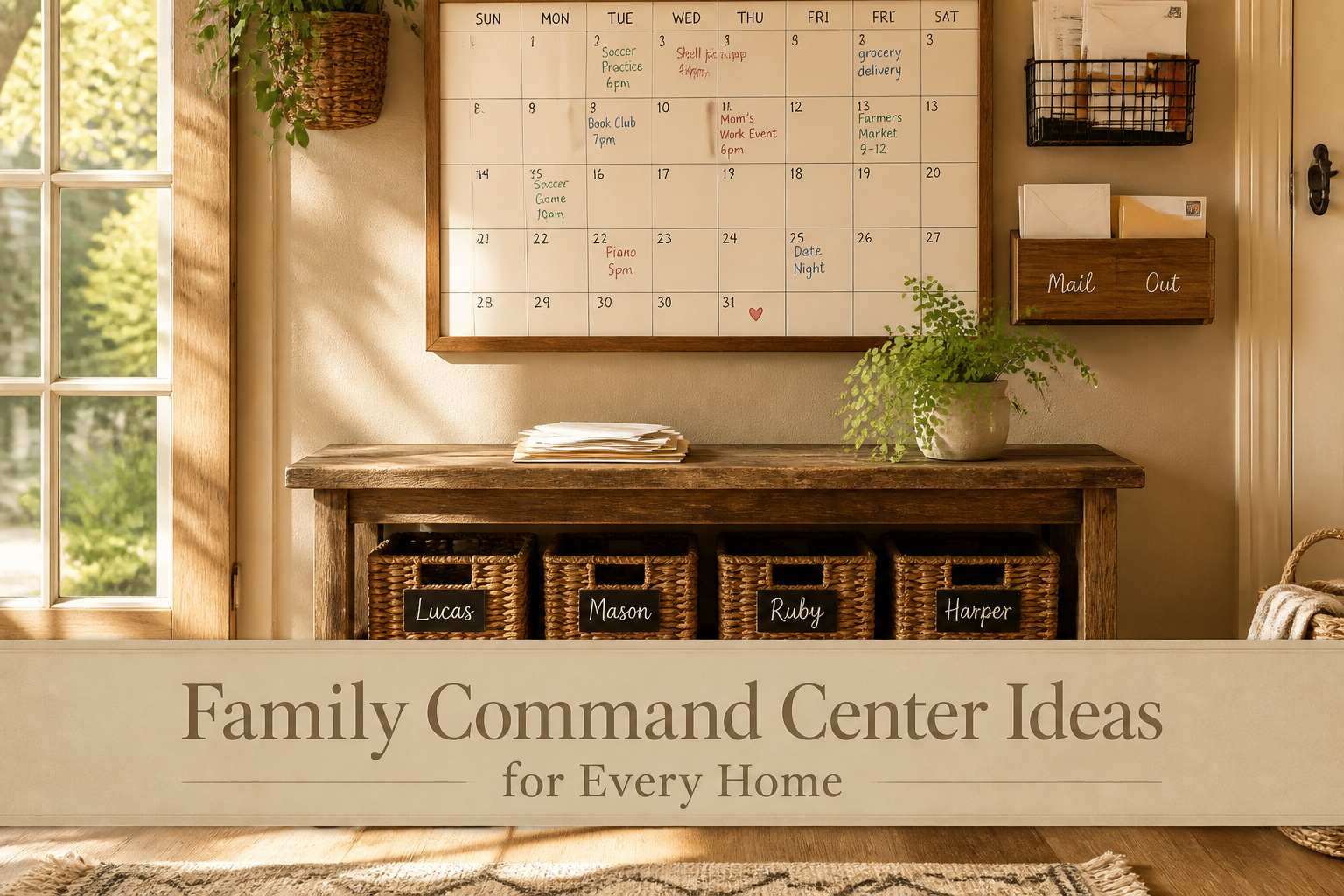
A family command center is a wall-mounted drop zone that keeps mail, schedules, and daily gear visible and in one place. The catch is that most families buy the bins before they know what goes in them, then watch the system sit empty for months. The setup that actually lasts starts with the pile on your counter, not the Pinterest board; one veteran of sixteen years runs hers on nothing more than a calendar you can read from across the room and labeled bins with actual names on them.
Organized Family Command Center

Labeled bins are what make this style actually work long-term. The sources that hold up, according to the families running them for years, are the ones where every slot has a name: mail, homework, permissions slips, each kid’s stuff. No one stands there guessing where something goes, so nothing gets dumped on the counter instead.
A calendar you can read from across the room is the other half. Dry-erase or chalkboard, the format matters less than the size. If you have to walk up and squint to see who has soccer, you’ll stop checking. The 16-year veteran of this system puts it simply: the best setup is the one your family can easily see and use every day, not the biggest wall you can cover.
This is where most families start because it is the foundation everything else builds on. Everything in its place, visible at a glance, no hunting through drawers at 7:15 a.m. Wall-mounted bins keep the floor clear, which matters in a hallway or kitchen where traffic piles up. Small spaces can still run this system; a narrow stretch of wall with a calendar and two or three labeled bins handles the basics without eating your room.
Recommended Products

[New Updated Mesh Design]- Made of mesh metal material with unique label panel,more convenient to figure out what`s in the pocket and more durable and solid than normal plastic ones.

Keep your space organized: This mail organizer is perfect for keeping your mails, files, newspapers, magazines, and keys well-organized. It's ideal for entryways, offices, and hallways, and helps reduce clutter.
Hallway Family Command Center

The hallway wall you walk past every day is probably doing nothing but holding up paint. A narrow strip of drywall, even 18 inches wide, can catch keys and outgoing mail before they hit the kitchen counter. That timing matters: you pass it coming in and going out, so the mail you need to drop lives here instead of migrating to the table.
Wire baskets mounted at eye level keep the floor clear, which keeps the walkway clear. A rustic marquee letter or similar piece breaks up the grid of function and gives the wall a reason to exist beyond storage. The whole setup reads as a gallery wall that happens to hold your life together, not a utility station bolted to the sheetrock.
The catch is traffic. This only works on the wall beside the door you actually use most often. A command center two rooms from the garage door collects dust while the mail piles up on the counter you were trying to save.
Recommended Products

MILD LUXURY & TOP QUALITY | Add a mild luxury tone to your kitchen, home or office with this glass weekly dry erase board. Featuring a gold printed planner layout on a frameless white tempered glass with gold mounting hardwares. The scratch resistant & stain non-absorbent glass provide lifetime durablity & best erasability, a great upgrade from acrylic and other old-fashioned whiteboard surface.

MAGNETIC MONTHLY PLANNER FOR WALL, OFFICE & CLASSROOM: 17"x23" dry erase calendar whiteboard gives you a full month at a glance—large enough for a family schedule, kitchen command center, or classroom wall, yet compact enough for a home office or dorm room.

【Double-Sided Versatile Calendar Whiteboard】2-in-1 functionality combines a monthly calendar on one side and a blank dry erase whiteboard on the other, offering ample space for planning your to do lists, daily,weekly planner and month schedules, memos and creative ideas.A must-have for home,office,or school—keeps your tasks visible, tracks study or training plans, coordinates family activities and ensures your work stays organized and efficient.
Rustic Hallway Command Center
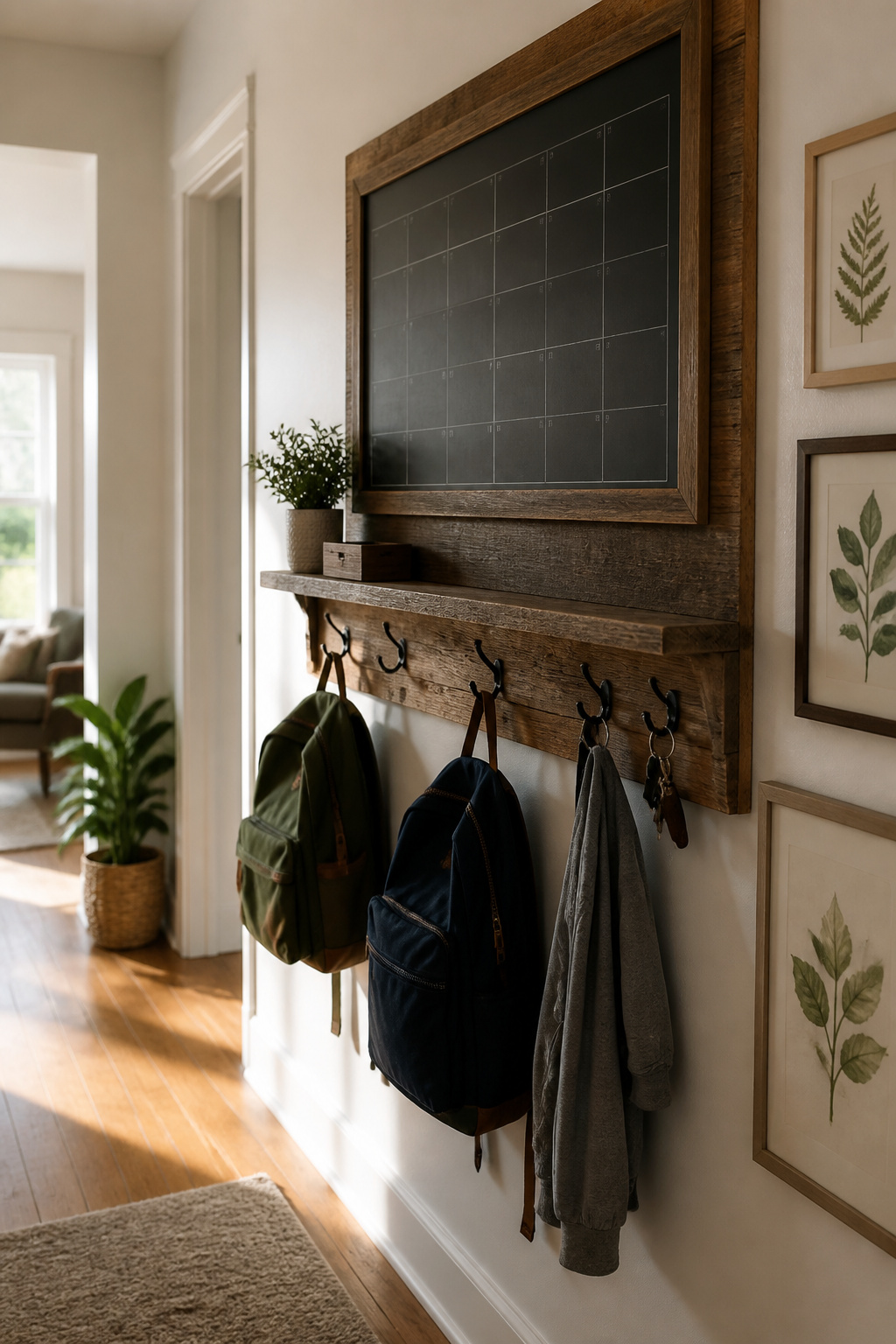
Reclaimed wood changes the whole mood of a hallway command center without adding a single inch to the footprint. Where a modern setup reads sleek and office-like, barn wood and weathered frames feel like something that grew in the house over time. I noticed this most when I swapped a whiteboard calendar for one framed in salvaged pine; the same wall suddenly felt like a mudroom in a century farmhouse rather than a corporate break room.
Barn hooks instead of a mail sorter keep the function but lose the rigidity. Screw two or three into a plank of reclaimed wood at shoulder height, and backpacks, tote bags, even a loop of keys become part of the texture. The wood hides scuffs that would show on painted surfaces, which matters in a hallway that sees daily traffic.
Weathered frames around printed schedules or chore charts do the same work as acrylic holders but soften the edges. Mixing wood tones is fine here; matching finishes would fight the accidental, collected-over-time look. The contrast with clean modern versions is really just material: same corkboard, same calendar, same basket for gloves, but the warmth makes you pause in the hallway instead of passing through.
Recommended Products

Farmhouse style wooden tabletop mail organizer and key holder tray with shabby whitewashed finish and stylish cursive "MAIL" and "KEYS" labels

TRAVEL ACCESSORIES:This PU leather valtet tray is made of quality PU leather,Bowl design.It is portable design,so that you can carry it with you when travling to keep your small items organized.It is portable design,so that you can carry it with you when travling to keep your small items organized.

【Spacious & Collapsible Design for Easy Storage】This valet tray offers a generous storage space to hold all your essentials like keys, wallet, phone, and coins. When not in use, it effortlessly flattens to a mere few millimeters thick, making it incredibly portable and space-saving for travel or drawer storage.
Cozy Cottage Family Command Center

Soft colors and fabric surfaces keep a command center from feeling like a desk job that followed you home. I like linen or burlap pinboards in washed sage, cream, or the palest gray-blue; they hold invites and school slips without the hard gleam of cork or whiteboard. Vintage tins and enamelware pitchers corral pens and markers with the dents and faded edges that prove someone used them before you did.
This style works when you want the calendar visible but not shouting. A wire basket hung beside the board catches mail without demanding you sort it immediately, and a small wooden ledge below holds the one notebook you actually open. The whole thing reads as a corner of your living space that happens to organize your life, rather than a system you tiptoe around.
Renters can pull this off with removable hooks and a single floating shelf. The fabric boards are lighter than framed chalkboards, and vintage containers thrift for a few dollars each. What you lose in sleekness you gain in forgiveness: a scuff on an old bread tin looks like character, not a mistake.
Recommended Products
![Joben Oligey 3 Set [Extra Large] Hanging Wall Baskets ,Wire Basket For Storage Pantry, Farmhouse Food Storage Kitchen Pantry Laundry Closet Garage RV ,Black](https://m.media-amazon.com/images/I/51Dr1ysZVEL._SL500_.jpg)
🍎【Sturdy wire baskets that can hold 50 pounds】 These baskets are made of durable steel wire with durable anti-rust and anti-corrosion coating, as well as wall-mounted hardware and hooks, which can hold 50 pounds. (Note: If you use non-marking paste instead of screws, the basket can hold 11 pounds)

PERSONALIZE THE LABEL PLATE: The label plate on this wall mounted wire basket with label allows you to customize organization so family members can quickly identify snacks toiletries or towels
![MaraFansie [Extra Large] Wire Basket 2-Pack Hanging Wall Organizer Cabinet Storage Basket Wall Mounted Shelves Rustic Farmhouse Decor for Home Kitchen Bathroom, BLACK](https://m.media-amazon.com/images/I/51Dveel+JZL._SL500_.jpg)
EXTRA LARGE CAPACITY - Comes with 2 packs of cabinet storage baskets. Each metal basket can be held a wide range of items in any room. Free up space, giving you extra large wall space for your extras. Measures 14.5"Wx5.5" Dx5.5"H each. Perfect for storing or organizing your favorite home décor.
DIY Wall Command Center

A wall-mounted unit built from one-by material and common hardware store brackets lets you size every shelf and hook to your actual stuff instead of buying pre-made gaps you do not need. I started measuring what we actually carry: two backpacks, a tote bag, one adult coat that never fits standard hooks, and a stack of mail that slides off shallow trays. The lumber cost less than a single finished shelf from most retailers, and cutting it to those exact depths meant no wasted wall space.
Pine boards take paint well enough for a hallway, though I would spend the extra few dollars on poplar if the command center sits somewhere visible like a kitchen entry. Brackets mount straight to studs; a stud finder is worth borrowing because lath-and-plaster or old drywall will shrug off anchors that claim otherwise. Leave the bottom shelf open for shoes or a basket, and mount the top one high enough that papers do not compete with heads in a narrow passage.
Recommended Products
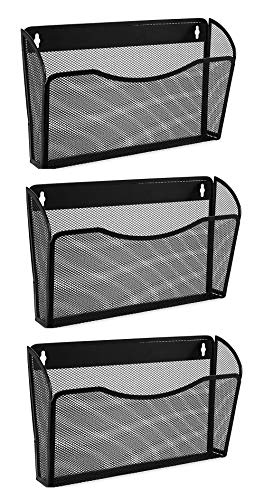
New Updated Sturdy & Stable Design: 3 Pack hanging file organizer made of elegant solid mesh metal construction, with powder coat finish file pocket that takes full advantage of your vertical space and keeps your desk clean

Wall Mount&Use in Flat: Every piece of metal wire basket can be wall mounted. Easy to hang on the wall or slatwall with pre-drilled holes and included accessories. Also, you can just place basket on flat surface, like work counter, kitchen counter, table top or desk.

Unique Skinny Basket: Dimension: 11.8x4.3x7.9 Inch/ 30x11x20cm(LxWxH). The wall basket with handle is made from natural water hyacinth by skilled artisans, with built-in metal frame, which is firm, sturdy and undeformed. Stylish design and warm colors, whether it is used in the office or at home, bring the enjoyment of storage. So it's a perfect gift that is completely handmade.
Easy DIY Clipboard Family Command Center

A clipboard per person, hung in a straight row, turns any blank stretch of wall into a working system. Each board holds the one or two papers that matter that week: permission slips, appointment cards, the field trip form that always vanishes into a backpack. Nothing hides in a drawer. Nothing needs a label maker or a color-coded key.
The whole setup runs under $15 and about twenty minutes, which makes it the easiest sell for a partner who thinks "command center" means a Saturday lost to Pinterest and a hundred-dollar receipt from the craft store. Standard letter-size clipboards from the office supply aisle, a handful of Command hooks or small nails, and you are done. Spacing them six inches apart keeps the row readable without crowding the wall.
Clips face out, papers slip in and out without fuss, and the vertical format stops the counter pile from growing back overnight. The limitation is also the point: when the board is full, something has to move on or get tossed. That forced turnover is what keeps the system alive past the first enthusiastic Sunday.
Recommended Products

TOP QUALITY MATERIAL BOARD:It is made from MDF with a 12mm aluminum frame and ABS cornersthat is sturdy and not easily dented
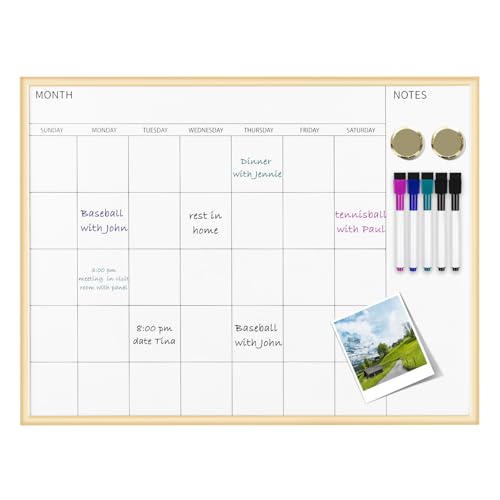
MAGNETIC MONTHLY PLANNER FOR WALL, OFFICE & CLASSROOM: 17"x13" dry erase calendar whiteboard gives you a full month at a glance—large enough for a family schedule, kitchen command center, or classroom wall, yet compact enough for a home office or dorm room.

PREMIUM METAL FRAME & DURABLE DESIGN: MaxGear 16" x 12" double-sided dry erase board features an upgraded sturdy metal frame for enhanced durability and long-lasting use. Built with high-quality materials and reinforced edges, this whiteboard resists bending and daily wear. The set includes 1 monthly calendar whiteboard and 1 dry erase marker, providing a simple and practical solution for everyday planning, scheduling, and organization.
Sweet and Simple Family Command Center

A pared-down family command center with just a calendar, one mail slot, and two hooks survives the weekend it takes to build and the budget it takes to buy. Black wire wall organizers work well here: one pocket for bills and invites, a wall calendar above it, and a pair of hooks for keys or a single bag. That is the whole system.
Three pieces of hardware turn any narrow slice of wall near where the family already gathers into a working drop zone. The calendar keeps schedules visible without the digital friction of checking an app. One slot forces a decision about what mail actually matters, because overflow has nowhere to hide. Two hooks, not six, mean only the most-used items stay out; the rest go to their proper homes.
Small apartments benefit most. So do families who looked at the 29-item Pinterest boards and felt the project slip from Saturday morning into a month of planning. The visible calendar, a single paper slot, and simple storage that is easy to maintain cover what actually needs managing. Everything else is decoration wearing function as a costume.
Recommended Products

【Premium Solid Black Walnut & Handcrafted Quality】Made of genuine solid black walnut wood with natural wood grain, offering a warm, luxurious feel over ceramic or plastic. Each key holder tray is hand-sanded and finished for durability, aging beautifully with time to become a timeless home decor piece.
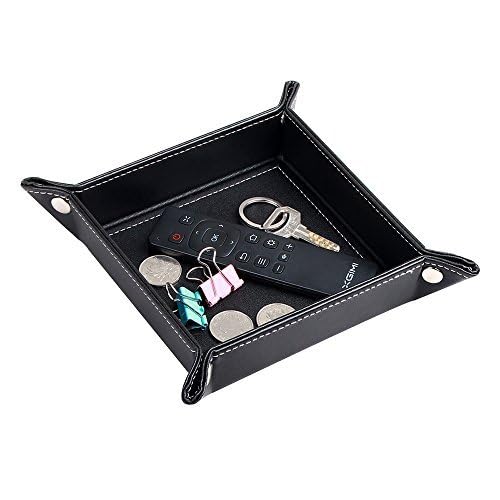
►SPACIOUS SIZE: Measuring 6.6 x 6.6 x 1.5 inches, this large capacity valet tray offers ample space for all your essentials. It functions as a comprehensive watch organizer, ring dish, and jewelry tray holder for your cufflinks, tie clips, bracelets, and phone.

Premium solid acacia wood tabletop 2-in-one entryway organizer with black script lettering "Mail" and "Keys" labels for home or office
Kitchen Work Station Command Center

The refrigerator side wall is the most underused real estate in most kitchens, and it sits exactly where everyone already passes a dozen times a day. That traffic pattern is what makes a kitchen work station command center actually get used instead of turning into decorated clutter you ignore.
I mounted a shallow ledge there about a year ago, deep enough for a laptop and a slim wire basket but nothing more. The narrow footprint keeps it from stealing counter space you need for actual cooking. Above the ledge, a wall calendar and a few labeled folders for school papers and pending bills. Below, a single basket per family member so permission slips and mail stop migrating to the kitchen table.
The setup that convinced me, reading through enough of these to spot the pattern, pairs a calendar with a computer station and supply bins rather than treating the wall as pure display. One version I kept returning to added a full work station with organized folders right in the kitchen flow, not off in some corner where intention goes to die. The wire basket detail stuck with me because it handles the visual mess without hiding papers so completely that you forget they exist.
If your fridge wall is truly skinny, you are still in play. A tall, narrow strip can carry a vertical arrangement: calendar at eye level, hooks below for keys, one shallow basket for the day’s outgoing items. The mistake is building deeper than about six inches front to back; anything thicker and the ledge becomes a hip-check hazard every time someone opens the refrigerator.
Recommended Products

6 Pack Wall Mounted Wire Baskets: 15.4 x 5.8 x 6 inches, wall mounted wire baskets fit your home space, keep your kitchen and bathroom neat and tidy, easy to store, find and access your items

【2 Extra Large Wall Mounted Baskets】Please note the dimensions of the 2 extra large baskets are a little different, 1PC is 13.97" L×5.51" W×2.75" H, and another is 13.77" L×5.11" W×2.75" H, both of anti-rust & anti-corrosion coating, simple style tolerant for any home space scene

【Easy to Assemble 】Our stackable wire baskets is easy to install, just fold the basket into the correct shape and snap together easily, and tighten it with a screwdriver to complete within 3 minutes.
DIY Chalkboard Family Command Center

Chalkboard paint turns a wall or framed panel into a calendar and message board in one surface, which is the main reason this style keeps showing up in family command center ideas year after year. A four-foot square of wall near the kitchen or back door gives enough room for a monthly grid, a running grocery list, and the kind of notes that used to live on sticky papers across the fridge. The paint itself runs cheap compared to buying a framed whiteboard of the same size, and the matte black reads cleaner in rooms where glossy surfaces already fight for attention.
The surface ages, and that aging is visible. After a few months of chalk dust and erase cycles, the black goes satin-gray in the high-traffic spots, and faint ghosts of old schedules linger no matter how aggressively you wipe. Some people re-season the board every season with a fresh coat of chalk rubbed across the whole surface and erased, which brings back depth for a while. Others let the wear accumulate and call it character. Whether that maintenance feels like charm or chore depends on how much you already tolerate in a house that runs on routines.
Recommended Products
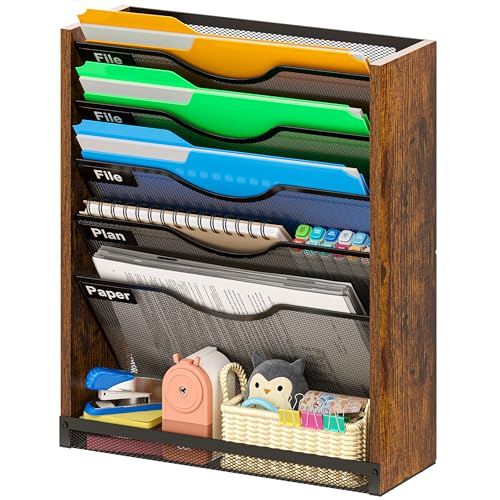
Multi-Purpose Storage: This file organizer can sit right on your desk or be mounted on the wall, helping you make the most of your space. It’s perfect for holding office documents, newspapers, mail, or loose papers. You can also hang it near your printer, in the entryway, or anywhere you need quick access. Great for offices, classrooms, or home study areas, it makes excellent use of vertical space.

𝐏𝐚𝐭𝐞𝐧𝐭 𝐏𝐞𝐧𝐝𝐢𝐧𝐠 - Large Size Mail Organizer:Overall dimensions are 13.8" wide x 10.9" high x2.8" deep, spacious enough to hold your daily essentials. Create a cozy space to keep all your belongings organized

✏️ Dimension: 12.8" L x 4.13" W x 10.04" H, this file organizer fits well in various spaces.
Abacus-Inspired Family Command Center

A set of wooden dowels mounted on the wall, each strung with painted beads that slide from one side to the other, turns chore tracking into something younger kids actually touch. Paper charts with stickers never stuck in my house; the same six-year-old who walked past a printed checklist every morning would stop to slide a red bead to "done" and hear it click against its neighbor. The abacus frame itself is easy enough to build from a 1×3 pine board and half-inch dowels, though a thrifted vintage classroom abacus repainted to match your wall works faster. For dinner voting, label each row with a meal option and let family members move one bead to the center rail; the row with the most beads in the middle wins. The sliding motion is the hook for kids under ten, and the noise gives immediate feedback paper cannot match. Paint the "done" or "winning" position in a contrasting color so the result reads at a glance from across the room. The downside is limited space; more than five or six chores per person and the rail gets crowded. For a two-child family, though, two vertical columns of three rows each keeps Saturday morning jobs visible without turning the wall into a spreadsheet.
Recommended Products

MILD LUXURY & TOP QUALITY | Add a mild luxury tone to your kitchen, home or office with this glass weekly dry erase board. Featuring a gold printed planner layout on a frameless non-magnetic clear tempered glass with gold mounting hardwares. The scratch resistant & stain non-absorbent glass provide lifetime durablity & best erasability, a great upgrade from acrylic and other old-fashioned whiteboard surface.

Complete Kit Included: 6 fine tip dry erase markers, 8 ultra-strong adhesive mounting strips, a premium eraser, a sleek marker holder, and an alcohol cleaning wipe. No extra trips to the store, no hunting for compatible markers. Unroll, flatten, mount, and you're set.

100% DRY ERASE CALENDAR: Laminated by our unique dry erase film, the surface of dry erase wall calendar can be wiped easily and cleanly months later. Dry or wet erase marker and chalkboard marker are workable, even permanent marker can be erased as our instruction
Easy Family Command Center
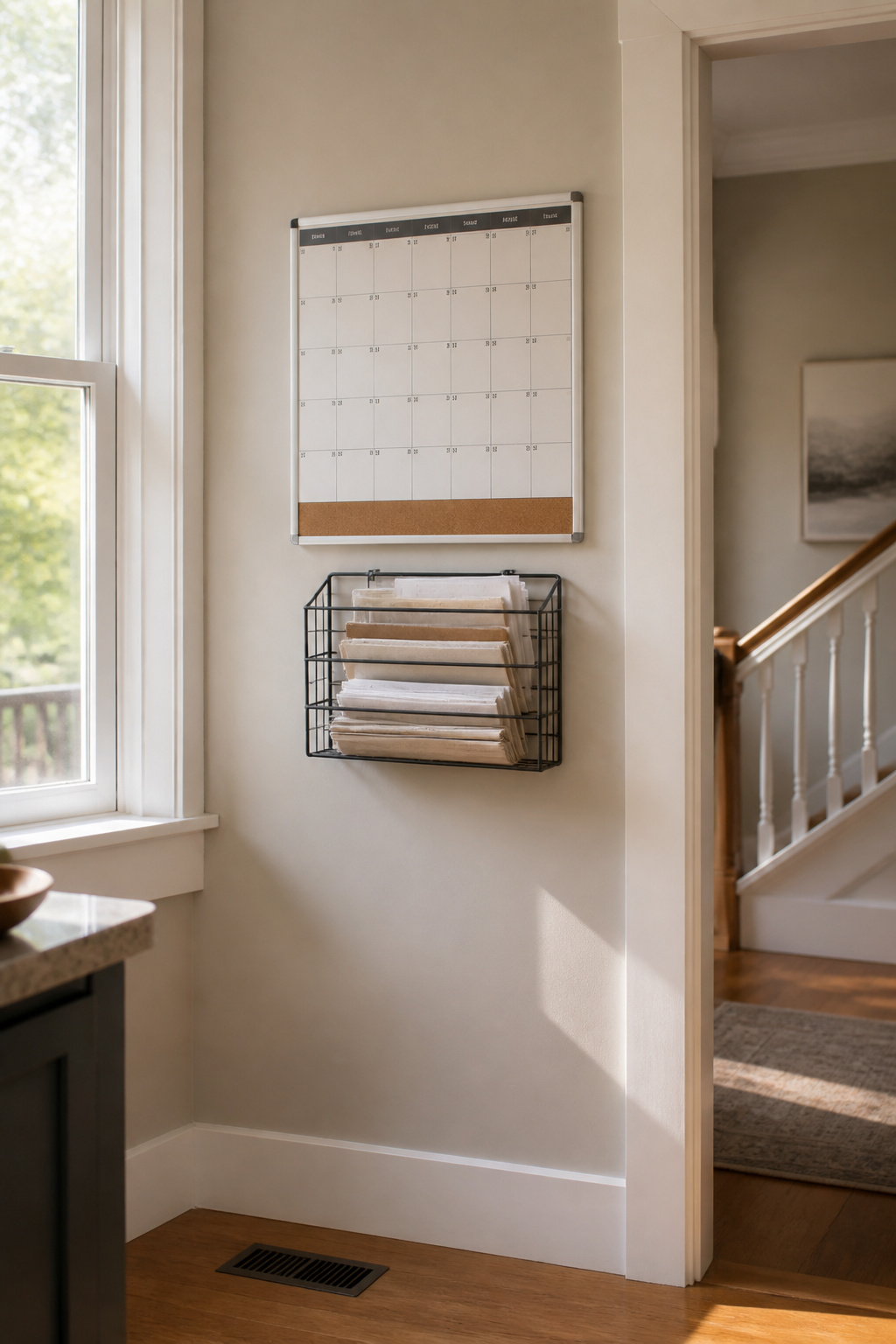
The first command center I ever put together cost about thirty-five dollars and came down in under ten minutes when the lease ended. A basic monthly wall calendar from Target, a wire document tray, and a handful of Command strips on an empty stretch of kitchen wall. No patching, no paint, no landlord conversation. The calendar held the shared schedule, the tray caught incoming mail and permission slips, and the strips meant the whole thing lifted off clean when it was time to move. That setup lasted two years and two apartments. The tray eventually sagged from a thick stack of magazines I should have recycled sooner, but the strips never failed the wall. For renters, that matters more than how polished it looks. Walmart carries the same parts for roughly the same spend if Target is not the closer stop. Either way, the whole project fits a Saturday morning and leaves Monday ready for use.
A True Family Command Center

The wall-mounted board with matching bins looks polished on day one, but a system that actually gets used needs a spot where every piece of paper has a next step. A decorative command center gathers mail until the pile slides onto the floor. A working one sorts it: here for permission slips that need signing today, there for bills due Friday, a hook for the keys that leave with the morning carpool.
Location matters more than aesthetics. A kitchen wall or mudroom catches people in motion, which is the whole point. If the calendar hangs where someone already stands to fill a coffee mug, checking it becomes automatic. Tuck it in a hallway you pass twice a day and the habit never forms.
Buy-in runs youngest to oldest, not the other way around. A five-year-old can move a magnet to mark homework done. A teenager will ignore anything that feels like surveillance. My read on this, after sorting through setups that failed: the board wins when each person controls one piece of it. One kid manages the sports schedule, another the dog-walking rotation. The parent who used to chase everyone down becomes the person who checks one column.
Family Command Center with Ikea Items
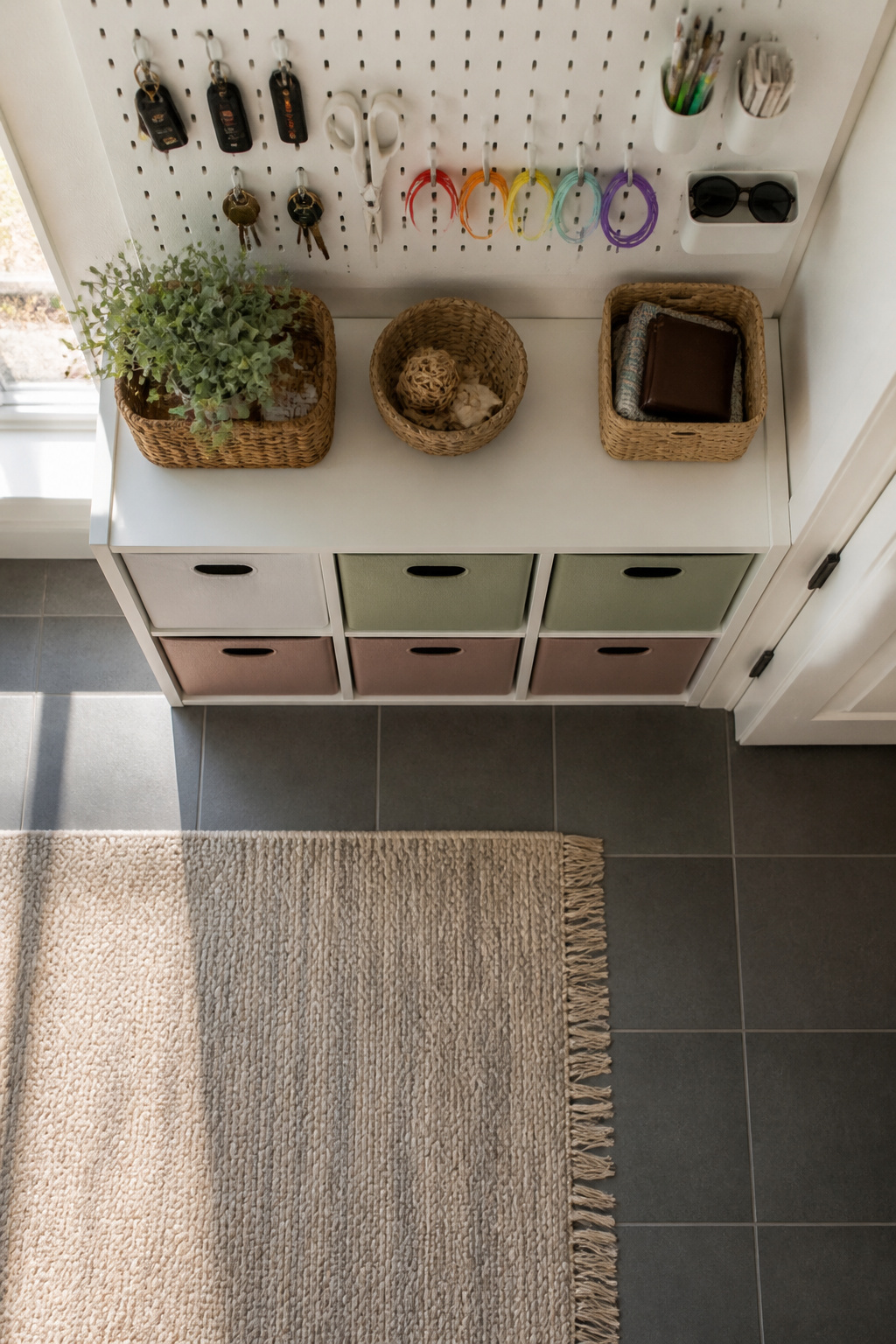
Ikea’s Kallax shelves, Skadis pegboard, and Tjena boxes line up into a command center that feels designed for the purpose even though nobody planned it that way. The Kallax cubbies sit low enough for backpacks and shoes if you place it bench-height, or stand it upright for filing baskets and a landing-zone surface on top. Skadis pegboard mounts above with hooks for keys, scissors, and the charging cables that otherwise vanish into couch cushions. Tjena boxes drop into the Kallax slots for mail sorting; one per family member, plus a fourth for bills that need action.
The whole setup runs under $80 if you skip cabinet doors on the Kallax. Doors look cleaner but they hide the mess instead of solving it, and in a command center that defeats the point. I have seen the open-cubby version hold up for two years in a rental entryway with nothing but wall anchors and a spirit level.
How to Set Up a Family Command Center

The first family command center I built failed because I bought the containers before I knew what went in them. A wall-mounted file rack looked sharp in the package, then sat empty for six months because the mail in our house never stays flat long enough to file. Start with the pile, not the bin. For a week, watch what actually lands on your counter: permission slips, keys, charging cables, the dog’s leash, that one envelope you keep meaning to open. The spot where those things naturally collect, usually the kitchen or a heavily trafficked entry, is where your command center lives. Work with that flow instead of trying to retrain the whole family to drop items three rooms away. Wall space helps, since calendars and hooks keep the surface clear for the daily debris that will not hang.
Homemade Family Command Center
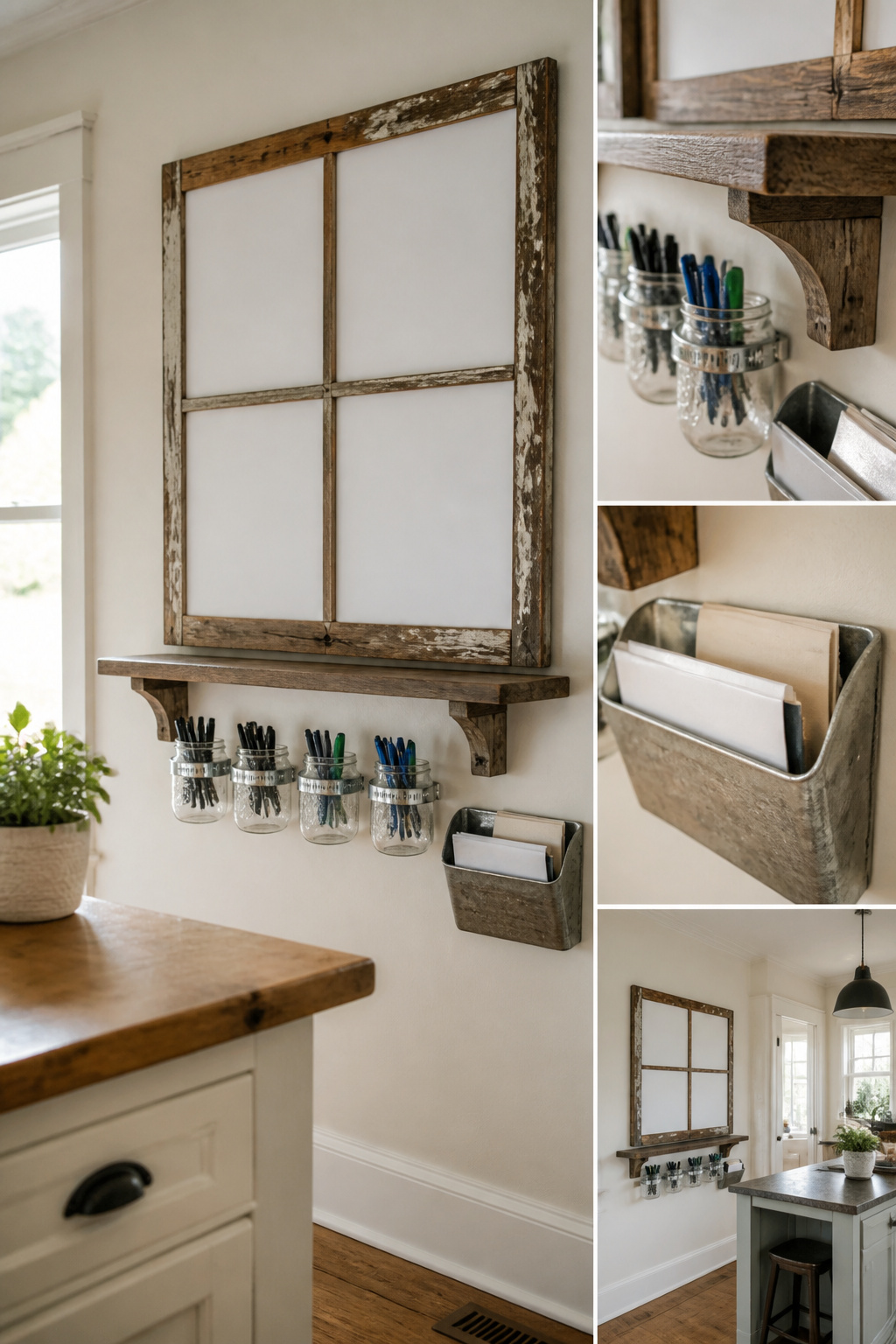
The best family command center ideas start with what you already have. An old window frame with the glass removed makes a whiteboard backing that no store-bought version can match; the mullions divide the surface into natural zones for each person. Mason jars screwed through their lids into the underside of a shelf hold pens, pins, and rubber bands where you can see them, and a thrifted tray becomes the mail slot. The irregularity is the point. The slight warp in the frame, the jar that sits a half-inch lower than its neighbor, the tray with someone else’s monogram: these are the details that make the wall feel lived-in rather than staged. Paint everything one color if the mismatch bothers you, but my preference is to leave the materials as found. The window frame shows its original white, the jars their aqua tint, the tray its brass wear. That contrast saves you from the catalog look that costs three times as much and still reads as temporary.
Home Command Center

A home command center can stretch well past calendars and permission slips if that is where your life actually piles up. In my house, the same wall that holds the dry-erase board also corrals the dog leashes, the stack of reusable grocery bags, and a single hook labeled shoes that somehow still works better than any lecture about checking the weather. The sources that know this setup best agree on one point: the location matters more than the label. Kitchen or mudroom, the spot your family passes without thinking is the one that catches the stuff before it hits the counter.
Pet gear and bag storage blur straight into mudroom territory, and that is fine. The goal is not to keep categories pure but to keep them findable. A bulletin board, a chalkboard for grocery lists, and a row of hooks will cover most families without any custom build. After sixteen years of running one version or another, the veteran voice in this space says the same thing: the system your family actually sees every day beats the bigger one they ignore.
Color Coordinated Command Center

Assigning each family member their own color sounds small, but it ends most of the daily friction before it starts. One glance at the calendar tells you whose dentist appointment is Thursday, whose soccer practice overlaps, and which parent is driving. The same color carries through to their hook for backpacks and a folder for paperwork. The permission slip argument disappears because the blue folder belongs to one kid and the green folder to the other; no one mixes them up, and no one claims to have "never seen it." I started with four colors from a basic pack of file folders, about six dollars, and added colored washi tape along the edge of each calendar column so the visual carried even at a distance. The tape peels off clean if you need to rearrange later, which matters in a rental where the command center might move with the lease.
Black and White Command Center

A monochrome command center reads as designed rather than crafty, which suits living rooms where a busy mom-board would fight the rest of the furniture. The base is a whiteboard with black vinyl lettering, clean enough to pass as architectural signage. Black frames with white matting hold the calendar and school forms; the contrast does the organizing work so you can skip color coding entirely.
What convinced me, looking through dozens of these setups, is how the restraint forces discipline. Every item has to earn its place against that stark background. White matting around black frames gives cheap prints the gravity of gallery pieces, which matters when the "art" is a February lunch menu. The downside is that dry-erase residue shows fast on white, so the board needs wiping every few days or it starts looking grimy rather than minimal. For renters, 3M Command strips hold the frames without wall damage, and peel-and-stick vinyl lettering removes clean when the lease ends.
Family Announcements Command Center Gallery Wall

A wall that only tracks schedules starts to feel like a kitchen office before the first month is out. The fix is mixing the functional parts with the stuff that actually makes you stop and look. I hang a large monthly calendar as the anchor, then frame a few rotating pieces around it: a school photo from last spring, a watercolor my niece brought over, a printed ticket stub from a weekend trip. The calendar handles logistics, but the frames keep the wall tied to memory.
The announcements rotate on simple binder clips or small cork tiles that stick without damage, which matters if you are renting. A birthday party invite stays up until the party passes, then something else slides in. That rhythm keeps the wall from going stale.
What separates a command center you actually use from one you ignore is whether you want to stand in front of it. A logistics wall dies fast; a memory wall pulls you back. The calendar still runs the show, but it shares space with the reasons the schedule matters in the first place.
Command Center in a Kitchen Cabinet
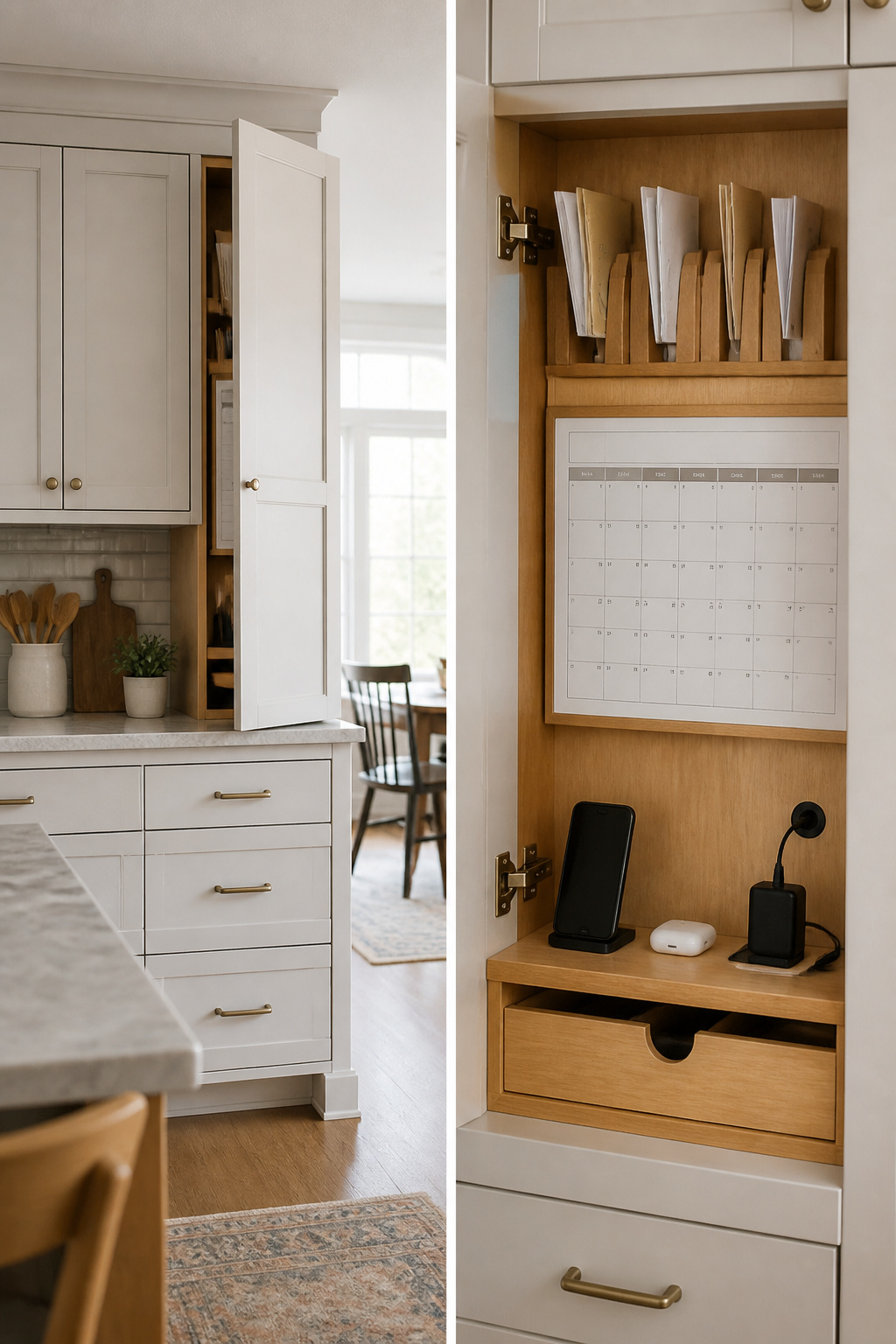
The cabinet door swings shut and the kitchen looks like nothing happened. Inside, a shallow calendar hangs on the back panel where you can still read it with the door half-open, mail slots screw into the thinner upper rail so envelopes stand vertical instead of stacking into a pile, and a charging station sits on the shelf itself with a small grommet hole drilled through for the cord. This setup is for families who cannot stand visual clutter in open kitchen space and would rather open a door than look at another corkboard.
What convinced me, reading through a dozen of these, is that the inside of a cabinet door is dead space until you mount something to it. The shelf stays clear for actual kitchen items; the calendar moves with the door so it never blocks the interior. One risk is choosing a cabinet too close to the stove, where heat and grease turn paper into something sticky. Pick a cabinet near the entry instead, the one you already open for keys.
Frequently Asked Questions
What is a family command center?
A family command center is a designated spot in your home, usually on a wall in a high-traffic area, that serves as the central hub for organizing schedules, mail, incoming paperwork, to-do lists, keys, and other daily essentials. It is essentially a place to drop the random items that would otherwise clutter your kitchen countertop. The best command centers are located where your family already passes without thinking, such as the kitchen or mudroom.
What should be included in a command center?
What you include depends on your family’s specific needs, but common elements are a shared family calendar, a place for papers and mail, hooks for keys, and a spot for notes or messages. Many families also add a charging station for devices, a menu plan, or a whiteboard for messages. The article emphasizes starting with the pile that actually lands on your counter rather than buying containers first, then building the system around those real items.
Where should a family command center go?
A command center should sit in a highly trafficked area where your family already passes in motion, such as the kitchen, mudroom, or the hallway wall beside the door you actually use most often. The spot where items naturally collect is where the command center lives; working with that flow beats trying to retrain everyone to drop things three rooms away. Location matters more than aesthetics because a calendar checked during the coffee refill becomes a habit, while one tucked down a rarely used hallway gets ignored.